MagSafe vs. Regular Wireless Charging: Why One Feels “Snappier” (and When It Matters)
Both cut cords, but they don’t feel the same. See how magnetic alignment changes speed, heat, and daily convenience—especially at your desk or in the car.
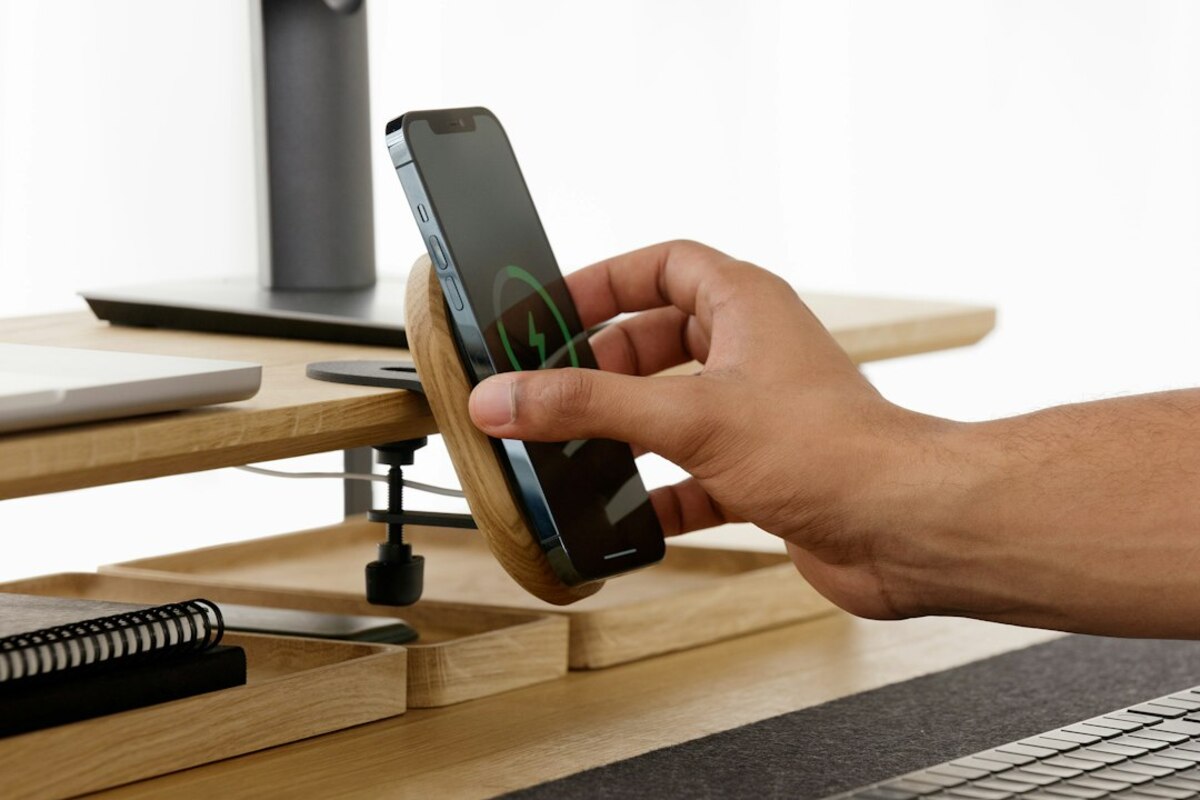
- Magnetic alignment usually makes charging more consistent (less “why didn’t it charge?” moments).
- Regular Qi pads can be cheaper and more flexible, but placement and case thickness matter a lot.
- Heat, accessories, and where you charge (nightstand, car, desk) often matter more than peak watt numbers.
The “wireless” part is easy. The placement part is not.
Wireless charging sounds like it should be simple: you put your phone down, it charges, you move on with your life. In reality, many people have had some version of this moment: you wake up, grab your phone, and realize it didn’t charge at all—or it charged only a little—because it wasn’t sitting in the right spot.
That frustration is the main reason MagSafe-style charging (magnetic alignment) feels different from a regular wireless charging pad (most commonly Qi). Both are still wireless charging. The big change is how reliably the coils line up between the phone and the charger.
Think of wireless charging like shining a flashlight at a small solar panel. If the beam is centered, it works great. If the beam is off to the side, the panel still gets some light, but it’s weaker and less efficient. Regular wireless charging is like “aiming by hand.” MagSafe is like the charger “clicking” into the best position for the strongest beam.
Here’s a quick, practical comparison:
| What you notice | MagSafe (magnetic alignment) | Regular wireless charging (Qi pads/stands) |
|---|---|---|
| How easy it is | Usually “snap on and go” | Sometimes “move it around until it catches” |
| Consistency | More consistent because alignment is guided | Depends on placement, pad design, and phone position |
| Accessory ecosystem | Strong: mounts, wallets, car holders, battery packs | Broad: many brands, many shapes, but less “locking” behavior |
| Best for | Desks, car mounts, “charge while using,” quick top-ups | Nightstands, guest areas, multi-device pads, budget setups |

Speed isn’t just watts: it’s alignment, heat, and “real-life charging”
People often compare wireless chargers by the number printed on the box: 7.5W, 10W, 15W, and so on. But with wireless charging, peak wattage is only part of the story. What matters in daily life is: How often do you actually get that speed?
Wireless charging depends on two coils (one in the charger, one in the phone) being close and well-aligned. When they aren’t aligned, the charger may still work, but it can become less efficient. Less efficient charging often means:
- More heat (energy wasted as warmth instead of battery power)
- Slower charging because the phone reduces power to protect the battery
- More stop-and-start behavior if the connection is borderline
Magnetic alignment tends to reduce the “coil guessing game.” The charger and phone find a repeatable position every time, which can help keep charging steadier. That can feel like it charges “faster,” even if the advertised numbers are similar, because it spends less time in inefficient positions.
A desk scenario: You’re working, your phone buzzes, you pick it up to reply, then you drop it back on the charger without looking. On a regular pad, you might place it slightly off-center. It still charges—maybe—but it might run warmer and deliver less power. With magnetic alignment, it lands in the same sweet spot each time.
A nightstand scenario: You set the phone down once and leave it there for hours. In that case, a regular Qi stand or pad can be perfectly fine because you have time to nudge it into place once. You don’t need the “snap” feeling; you need reliability over a long stretch.
Heat is a big hidden player here. Wireless charging inherently produces more heat than plugging in a cable (there’s more energy lost along the way). When a phone gets warm, it often protects itself by slowing down charging. So the “best” setup is often the one that stays coolest—usually meaning solid alignment, a quality charger, and a case that doesn’t interfere.
Case thickness and materials matter too. Some cases create extra distance between the coils. Others include metal components, magnets, or ring holders that can interfere with charging efficiency. This is why two people can buy the same charger and have totally different experiences.
To make this concrete, here’s a quick checklist you can use at home (no tools required):
- Touch test: If your phone gets noticeably hot on a charger, it may charge slower over time.
- Consistency test: Put the phone down 10 times in a row without looking. Does it charge every time?
- Case test: Try charging for 15 minutes with and without the case. If the difference is obvious, the case is part of the story.
Which one fits your routine? Small choices that change the experience
The most useful way to compare MagSafe and regular wireless charging is to map them to the places you charge most. Many people don’t have “one charger.” They have a whole charging ecosystem: nightstand, desk, kitchen, car, travel bag.
At the nightstand: Regular wireless chargers often win on simplicity and price. You set the phone down once and sleep. A slightly slower speed rarely matters because you have hours. A stand can be especially helpful if you like seeing the clock or notifications without picking up the phone.
At a work desk: This is where magnetic alignment tends to feel best. Desk charging is full of micro-moments: pick up the phone, put it down, repeat. The “snap” reduces the mental overhead. If you use your phone as a timer, music controller, authentication device, or for frequent calls, the consistency can be worth it.
In the car: Magnetic alignment is often a game-changer. Car charging is bumpy and vertical. A regular Qi mount can work, but alignment can drift with vibrations, and some mounts squeeze the phone, which can be annoying. Magnetic mounts can make it easier to attach and detach one-handed at a red light (though you should always do this safely and preferably while parked).
For travel: Regular Qi can be easier if you want flexibility—charging multiple different phones or using hotel/airport pads without thinking. Magnetic systems can be great if you bring your own gear, but you may end up packing more specific accessories (and you’ll care more about compatible cases).
If you share chargers with family or coworkers: Regular Qi is often the “universal donor.” If everyone has different phone brands or older models, a standard pad can be the easiest shared solution. Magnetic alignment shines when you’re optimizing for one main device and its accessory ecosystem.
It also helps to know what you’re really buying when you pay more for magnetic systems. You’re not only paying for power; you’re paying for repeatability and attachment. That attachment enables other everyday tools: car mounts, kickstands, wallet attachments, battery packs that stay put, and desk stands that don’t require careful placement.
One more real-life detail: some people love to use their phone while it’s charging—watching a video, scrolling, or taking a call. A flat Qi pad can make that awkward because the phone is lying down and can slide around. A magnetic charger paired with a stand-like accessory can make “charging while using” feel more natural, like docking a device instead of setting it on a coaster.
Neither is automatically “better.” Battery wear is influenced by heat and charging patterns. Magnetic alignment can help keep charging more efficient (often less heat), but a high-quality Qi charger with good alignment can be gentle too. If your phone gets hot often, that’s the bigger concern than the label on the charger.
Neither is automatically “better.” Battery wear is influenced by heat and charging patterns. Magnetic alignment can help keep charging more efficient (often less heat), but a high-quality Qi charger with good alignment can be gentle too. If your phone gets hot often, that’s the bigger concern than the label on the charger.
Common causes are off-center placement, a thick or incompatible case, a charger that can’t deliver the phone’s preferred speed, or the phone warming up and throttling. Try repositioning, testing without the case, and using a reputable power adapter.
Common causes are off-center placement, a thick or incompatible case, a charger that can’t deliver the phone’s preferred speed, or the phone warming up and throttling. Try repositioning, testing without the case, and using a reputable power adapter.
Magnets can affect magnetic-stripe cards, and wallet-style attachments can create bulk or change alignment. If you carry hotel keys or older mag-stripe cards, keep an eye on that. For everyday contactless payments, many people use digital wallets and never notice an issue—but physical cards can still be impacted depending on the setup.
Magnets can affect magnetic-stripe cards, and wallet-style attachments can create bulk or change alignment. If you carry hotel keys or older mag-stripe cards, keep an eye on that. For everyday contactless payments, many people use digital wallets and never notice an issue—but physical cards can still be impacted depending on the setup.
If you’re deciding between the two, a helpful way to choose is to pick the one that reduces your most common charging annoyance. If your annoyance is “I keep missing the sweet spot,” magnetic alignment solves that. If your annoyance is “I need something cheap and universal in the kitchen,” a regular Qi pad is usually the calmer choice.