The “Sunset Scroll” Problem: A Simple Evening Routine That Makes Your Brain Feel Off-Duty
If your nights disappear into “just one more” scrolling, try a tiny off-ramp: a 20-minute screen buffer that helps you unwind without overhauling your life.
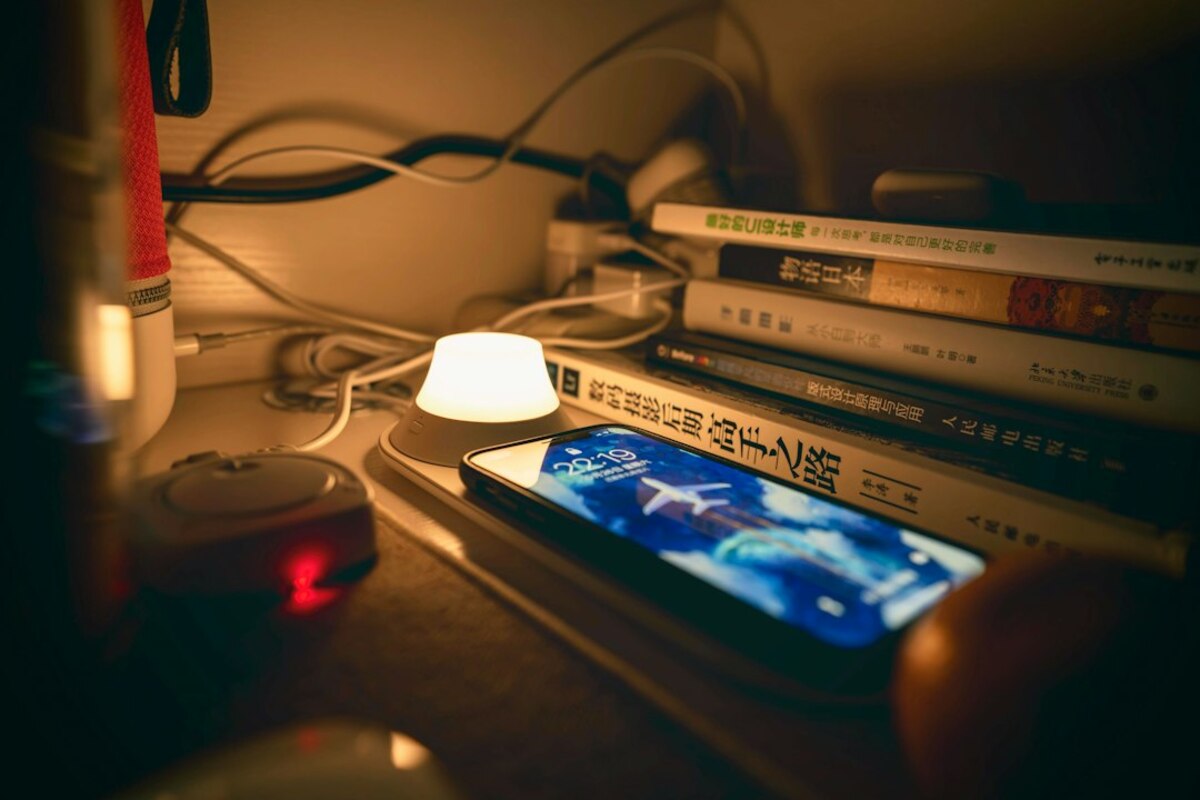
- Late-night scrolling keeps your brain in “open tabs” mode, even if you feel physically tired.
- A short, predictable screen buffer (20 minutes) works better than strict phone bans for most people.
- Swap the scroll with low-stimulation options and set your phone to make the easy choice the healthy one.
Why “sunset scrolling” feels so hard to stop
You know the moment: you’re in bed, lights low, telling yourself you’ll check one thing. A message. A headline. A video you saved earlier. Then the next thing loads, and suddenly it’s late—again.
This habit has a nickname in a lot of households now: “doomscrolling.” But many people don’t feel like they’re doomscrolling. They’re “sunset scrolling”—a softer, more common version that happens in the evening when your brain is tired and your willpower is low. You might be watching cooking clips, browsing travel photos, reading about productivity, or catching up on group chats. None of it feels dramatic. Yet you still go to sleep feeling oddly wired, like your mind didn’t get the memo that the day is over.
Part of the problem is that your phone is a perfect “unfinished story machine.” Each swipe promises a little payoff: a laugh, a novelty hit, a new fact, a social update. Your brain loves novelty because novelty used to mean “important information.” In the evening, when you’re already depleted, novelty is extra sticky.
There’s also the open loops effect. One post reminds you of an email you didn’t answer. One message raises a question you can’t resolve tonight. One news item makes your brain start planning or worrying. You’re not just consuming content—you’re collecting mental tabs. Even if you’re lying still, your attention is doing laps.
And yes, light plays a role too. Bright screens tell your body it’s still “daytime-ish.” But many people can dim screens and still feel mentally revved. That’s because the bigger issue often isn’t the light—it’s the stimulation.
Think of your mind like a busy restaurant kitchen. At 9:30 p.m., the chef wants to close down: wipe counters, turn off burners, put leftovers away. Scrolling is like accepting new orders at the last second. Even if the orders are small, the kitchen can’t shut down until they’re handled.

The 20-minute “screen buffer” that acts like an off-ramp
The goal isn’t to be perfect. The goal is to create a reliable transition—a small routine that tells your brain, “We’re switching modes now.” One of the most realistic tools for that is a screen buffer: a short, predictable gap between your last scroll and your actual attempt to sleep.
Why 20 minutes? It’s long enough for your attention to settle, but short enough that it doesn’t feel like you’re “wasting” your evening. Many people fail with big rules (“No phone after 8 p.m.”) because life is messy: late dinners, kids, work messages, time zones, sports games. A buffer is flexible. You can start it at 9:10 one night and 10:45 the next. It still works because the sequence is what matters.
Here’s what the routine looks like in plain terms:
- Pick a “last check” moment. This is when you intentionally do your final scroll/check for the night. You’re not fighting your habits—you’re putting them on a schedule.
- Set a 20-minute timer. When it starts, you’re done with feeds and messages (unless it’s truly urgent). Your phone can still exist, but it stops being entertainment.
- Do a low-stimulation activity. This is the bridge from “input mode” to “rest mode.”
If you’ve ever watched a movie and noticed the credits help you “come back to yourself,” that’s the idea. The buffer is your personal credits roll.
Not sure what counts as “low stimulation”? Use this quick rule: choose something that doesn’t multiply thoughts. Scrolling multiplies thoughts. So does intense problem-solving, competitive gaming, heated debates, or reading emotionally charged news. Low stimulation tends to be repetitive, sensory, or gently absorbing.
| Activity type | What it feels like | Examples (20 minutes) |
|---|---|---|
| Body-based | Your attention drops into physical sensations | Warm shower, stretching, slow walk around the block, skincare routine done unhurried |
| Hands-busy, brain-light | Gentle focus without “rabbit holes” | Folding laundry, tidying one surface, prepping tomorrow’s coffee, simple puzzle book |
| Soft entertainment | Comforting, predictable, not too exciting | Light fiction, familiar music playlist, calm audiobook, one episode of a slow show (not auto-played into three) |
| Reflection (very small) | Closing loops instead of opening them | Write 3 bullet notes: “done today / tomorrow / not now,” gratitude list, jot worries + next step |
The magic isn’t in picking the “perfect” activity. It’s in keeping it boring enough that your brain gets the message: the party’s over.
If 20 minutes feels impossible, start with 10. If your nights are currently a 90-minute scroll, even a 10-minute buffer is a real shift. If 20 feels easy, you can expand it later.
One more key detail: the buffer works best when it’s the same order every night. Not the same time, the same order. That predictability is what trains your brain to anticipate sleep.
Make it easier than scrolling: small tweaks that actually stick
Even with a buffer plan, the phone has gravity. When you’re tired, you’ll reach for the easiest option. So the strategy is to make “easy” point away from endless feeds.
Try a few of these friction tricks. They’re intentionally small—because small is what survives a stressful week.
- Move the most tempting apps off your home screen. Not delete—just hide. If you have to search for the app, you’ve created a two-second pause. Two seconds is often enough to remember your buffer.
- Turn off auto-play where you can. Auto-play is basically the phone saying, “Don’t decide.” You want to decide.
- Use “Downtime” or app limits as a speed bump, not a prison. Set it so you can override it, but it still asks, “Are you sure?” That moment of choice is the win.
- Charge your phone outside the bedroom (if possible). If that’s not realistic, put it across the room. “Not within arm’s reach” is a surprisingly strong boundary.
- Replace the default pick-up with a default alternative. Put a book, magazine, or puzzle on your pillow. The goal is not virtue; it’s convenience.
Here’s a real-life scenario that makes this feel less abstract:
Imagine Sam, who works late. Sam doesn’t want a strict “no screens after 9” rule because it’s unrealistic. Instead, Sam decides: “My last check is when I plug in my phone.” The phone gets plugged in at whatever time Sam is actually ready to wind down. Then Sam starts a 20-minute timer and does a short routine: wash dishes (10 minutes), stretch (5 minutes), write tomorrow’s top three tasks on a sticky note (5 minutes). Sam still isn’t perfect, but the nights stop disappearing.
Notice what changed: not willpower—structure. The routine prevents the “How did it get so late?” effect.
It can be valid. The question is whether it leaves you feeling rested or “mentally sticky.” Many people experience the first 10 minutes as relaxing and the next 40 as restless. A screen buffer doesn’t demonize your phone; it simply puts a gentle boundary around it so relaxation doesn’t accidentally become stimulation.
It can be valid. The question is whether it leaves you feeling rested or “mentally sticky.” Many people experience the first 10 minutes as relaxing and the next 40 as restless. A screen buffer doesn’t demonize your phone; it simply puts a gentle boundary around it so relaxation doesn’t accidentally become stimulation.
You can keep calls or specific contacts available while still avoiding feeds. Set your phone so VIP contacts can ring through, but put social apps in a folder or use app limits. The buffer is about reducing optional stimulation, not blocking real responsibilities.
You can keep calls or specific contacts available while still avoiding feeds. Set your phone so VIP contacts can ring through, but put social apps in a folder or use app limits. The buffer is about reducing optional stimulation, not blocking real responsibilities.
That’s normal. Treat it like brushing your teeth: missing a night doesn’t mean you stop being a person who brushes. Restart the next evening. If you keep breaking it, shrink it—10 minutes instead of 20—or make the buffer activity easier (for example, “put on calm music and fold one small pile of laundry”).
That’s normal. Treat it like brushing your teeth: missing a night doesn’t mean you stop being a person who brushes. Restart the next evening. If you keep breaking it, shrink it—10 minutes instead of 20—or make the buffer activity easier (for example, “put on calm music and fold one small pile of laundry”).
If you want to get extra practical, try this one-week experiment: keep everything the same, but add only one change—a consistent last-check cue. For example: “Last check happens when I start charging my phone,” or “Last check happens after I lock the front door,” or “Last check happens after I take my nighttime meds.” Anchoring your last check to something you already do is like attaching a new car to an existing train—less effort, more follow-through.
And if you’re the kind of person who resists routines because they feel restrictive, frame this as the opposite: it’s a way to give yourself more freedom tomorrow. When your brain actually feels off-duty at night, mornings tend to feel less like dragging a heavy suitcase.